Fee-Only Roth Conversion Planning
A Roth conversion is a tax decision with a very long tail. We model it as an independent, fee-only fiduciary adviser, paid only by you, with no commission or product sale attached to the answer. If converting does not serve you, we will tell you that.
- 100% Fee-Only, No Commissions
- Since 1996 Independent Fiduciary Firm
- CFP® Jamie Milne, CERTIFIED FINANCIAL PLANNER™ Professional
- VT and NH Winooski and St. Johnsbury Offices
What a Roth Conversion Analysis Looks Like
A Roth conversion moves money out of a traditional IRA or an employer plan and into a Roth IRA. You pay income tax on the converted amount in the year you convert, and in exchange those dollars grow and come out tax free later, with no required withdrawals during your lifetime. That is the whole idea in one sentence. Everything that follows is arithmetic and timing.
The arithmetic is where households get stuck. Converting raises your taxable income this year, which can push you into a higher bracket, make more of your Social Security taxable, and raise your Medicare premiums two years down the road. Converting too little leaves a growing pre-tax balance that becomes someone else's tax problem later. The right answer depends on your brackets, your other income, your time horizon, and what you want the money to do after you are gone.
We work through that math with you and give you a conversion plan in writing, usually as a year-by-year schedule rather than a single move. Because we are compensated only by our clients, nothing in the recommendation is tied to a product. We have no annuity to sell alongside the conversion and no commission riding on whether you convert at all.
You do not need to hand over your accounts to get this work done. Many clients engage us for a one-time, fixed-fee analysis, take the written plan, and carry out the conversions themselves. Others prefer ongoing management so the schedule gets revisited every year as tax law and income change. Both paths are available, and we will tell you which one we think fits.
Why Timing Matters
For years the pitch for converting was simply to beat a scheduled tax increase. That deadline is gone. The 2017 individual rate structure no longer carries a sunset date, so there is no calendar forcing anyone's hand. What remains is the part that always mattered more: your own brackets, your own required withdrawals, and what happens to the pre-tax balance you never spend.
Traditional IRAs and most employer plans require minimum distributions starting at age 73 (75 for those born after 1959), and those withdrawals are taxed as ordinary income whether or not you need the money. Source: Internal Revenue Service, Retirement Plan and IRA Required Minimum Distributions.
A Roth IRA owner is not required to take distributions from a Roth IRA at any age, so converted dollars can stay invested for as long as you live. Source: Internal Revenue Service, Publication 590-B.
Up to 85 percent of your Social Security benefits can become taxable once combined income crosses the federal thresholds, and conversion income counts toward that calculation. Source: Social Security Administration, Income Taxes and Your Social Security Benefit.
Medicare Part B and Part D income-related surcharges are based on the modified adjusted gross income reported on your tax return from two years earlier, so a conversion today can raise premiums two years later. Source: Medicare.gov, Monthly Premium for Drug Plans and Part B Costs.
Two Rules Worth Knowing Before You Convert
A conversion cannot be reversed. The ability to recharacterize a Roth conversion back to a traditional IRA was repealed for conversions made in 2018 and later. Once the money moves, the tax is owed. Source: Internal Revenue Service, Retirement Plans FAQs Regarding IRAs.
Vermont follows your federal number. Vermont taxable income begins with federal adjusted gross income, so conversion income flows straight onto the Vermont return as well as the federal one. That makes the size and timing of each conversion a state tax decision too. Source: Vermont Department of Taxes, 32 V.S.A. § 5811.
This page is general information, not tax or legal advice, and we coordinate with your tax professional before any changes are made.
Our Fee-Only Roth Conversion Services
Every engagement below is quoted as a flat fee or an hourly rate agreed in advance. None of them require you to move your accounts to us.
One-Time Conversion Analysis
A fixed-fee review of whether converting fits your brackets, your timeline, and your retirement income picture. You get a written recommendation and a conversion amount, then you decide what to do with it.
See one-time services and feesMulti-Year Conversion Schedules
Most conversions work better spread across several years than taken in one move. We build a year-by-year schedule that fills the brackets you choose and stops where the next dollar gets expensive.
Bracket, Medicare, and Social Security Coordination
Conversion income interacts with the taxation of your Social Security benefits and with Medicare income-related surcharges two years out. We model those thresholds together rather than one at a time.
The Retirement Gap Years
The window between the end of a paycheck and the start of required withdrawals is often the lowest-income stretch of a retirement. We look at whether that window is being used, or simply passing by.
Explore our retirement planningLegacy and Beneficiary Considerations
Pre-tax balances left to the next generation carry a tax bill with them. We look at whether converting now, at your rate, serves the people who will inherit the account better than leaving it as is.
Annual Reviews Under Ongoing Management
Tax law, income, and account balances all move. Clients who prefer a continuing relationship get the conversion schedule revisited each year rather than set once and forgotten.
See ongoing management and feesWhy Clients Bring Roth Conversion Decisions to Us
A Roth conversion is one of the few planning moves that is permanent the moment it happens. That is a good reason to get advice from someone whose pay does not change based on what you decide.
We have been an independent firm since 1996, and we have stayed fee-only the whole time. We do not sell products, we do not accept commissions, and we do not have a home office with a sales target. You can engage us once, get the analysis in writing, and walk away with it.
- ✓
Compensated Only by Clients
One hundred percent of our compensation is paid by the people we advise. There is no commission attached to a conversion, and none attached to leaving the money where it is.
- ✓
A Fiduciary Advisory Relationship
Our advisory recommendations are made in your best interest, based on your goals rather than on a product that needs placing.
- ✓
Advice You Can Carry Out Yourself
Our one-time services are built for people who want a plan without handing over their accounts. You keep control, and you implement at your own pace.
- ✓
Rooted in Vermont, Serving Northern New England
We live and work where our clients do, with offices in Winooski and St. Johnsbury, and we meet virtually when that is easier.

Jamie Milne, CFP®
A CERTIFIED FINANCIAL PLANNER™ professional who came out of banking and insurance and started the firm in 1996 to build a completely independent company. He takes his fiduciary oath seriously and has kept the firm fee-only since day one, with all of its compensation paid by clients.
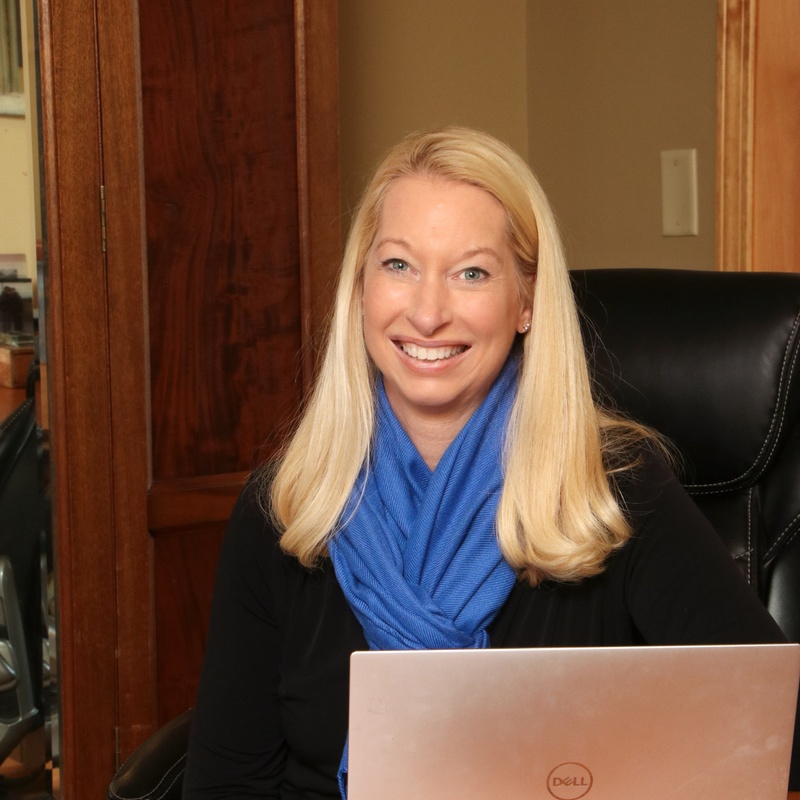
Katheryn Milne
A Certified Public Accountant licensed in Vermont who joined the firm in 2023. She coordinates client questions, follow-up, and the paperwork that conversions generate, and she is a lifelong Vermonter.
Areas We Serve
We meet clients at our Winooski and St. Johnsbury offices and virtually throughout the region. Roth conversion work travels well, so distance is rarely the constraint.
- Greater Burlington and Winooski, VT
- St. Johnsbury and the Northeast Kingdom
- Montpelier and central Vermont
- Communities across New Hampshire
- Northern New England statewide
Winooski, VT 05404
St. Johnsbury, VT 05819
Request a Fee-Only Roth Conversion Consultation
Bring us the accounts, the brackets, and the questions. We will tell you whether a conversion makes sense for you, how much, and over how many years, in writing and at a fee quoted before we start.
If the answer is that you should leave things alone, that is what you will hear. Nothing about our compensation changes either way.
Winooski and St. Johnsbury, Vermont. Virtual meetings available throughout northern New England.
Frequently Asked Questions
What Is a Roth Conversion?
A Roth conversion moves money from a traditional IRA or an employer retirement plan into a Roth IRA. You pay ordinary income tax on the converted amount in the year of the conversion, and those dollars then grow tax-free and come out tax-free in qualified withdrawals later.
Is There an Income Limit on a Roth Conversion?
No. Roth contributions have income limits, but Roth conversions do not. Anyone holding a traditional IRA or an eligible employer plan balance can convert, at any income level and at any age.
Can I Undo a Roth Conversion if I Change My Mind?
No. The ability to recharacterize a conversion back to a traditional IRA was repealed for conversions made in 2018 and later, according to the Internal Revenue Service. Once the money moves, the tax is owed, which is why the amount and the timing deserve careful analysis first.
Does a Roth Conversion Count Toward My Required Minimum Distribution?
No. In any year you owe a required minimum distribution, you must take that distribution first, and the required amount itself cannot be converted. Only dollars above the required minimum are eligible to move into a Roth IRA.
Are Roth Conversions Taxed in Vermont?
Yes. Vermont taxable income begins with your federal adjusted gross income, so a conversion raises what you owe Vermont as well as what you owe federally in the year you convert. Both bills are worth modeling before you settle on an amount.
Should I Convert All at Once or Over Several Years?
It depends on your brackets and your other income. Many households spread conversions across several years so that each year fills a chosen bracket without spilling into a higher one or crossing a Medicare surcharge threshold. Building that schedule is part of the analysis.
What Does Fee-Only Mean, and Why Does It Matter for a Roth Conversion?
Fee-only means one hundred percent of our compensation is paid by our clients. We accept no commissions and sell no products. For a decision as permanent as a conversion, that means the recommendation you receive is not tied to anything we would earn from a product sale, and advising against converting costs us nothing.
Do I Have to Become an Ongoing Client to Get a Roth Conversion Analysis?
No. Our one-time services are designed for people who want a written plan without handing over their accounts. You can engage us for a fixed-fee analysis, take the conversion schedule with you, and carry it out yourself. Ongoing management is available if you would rather have the schedule revisited each year.